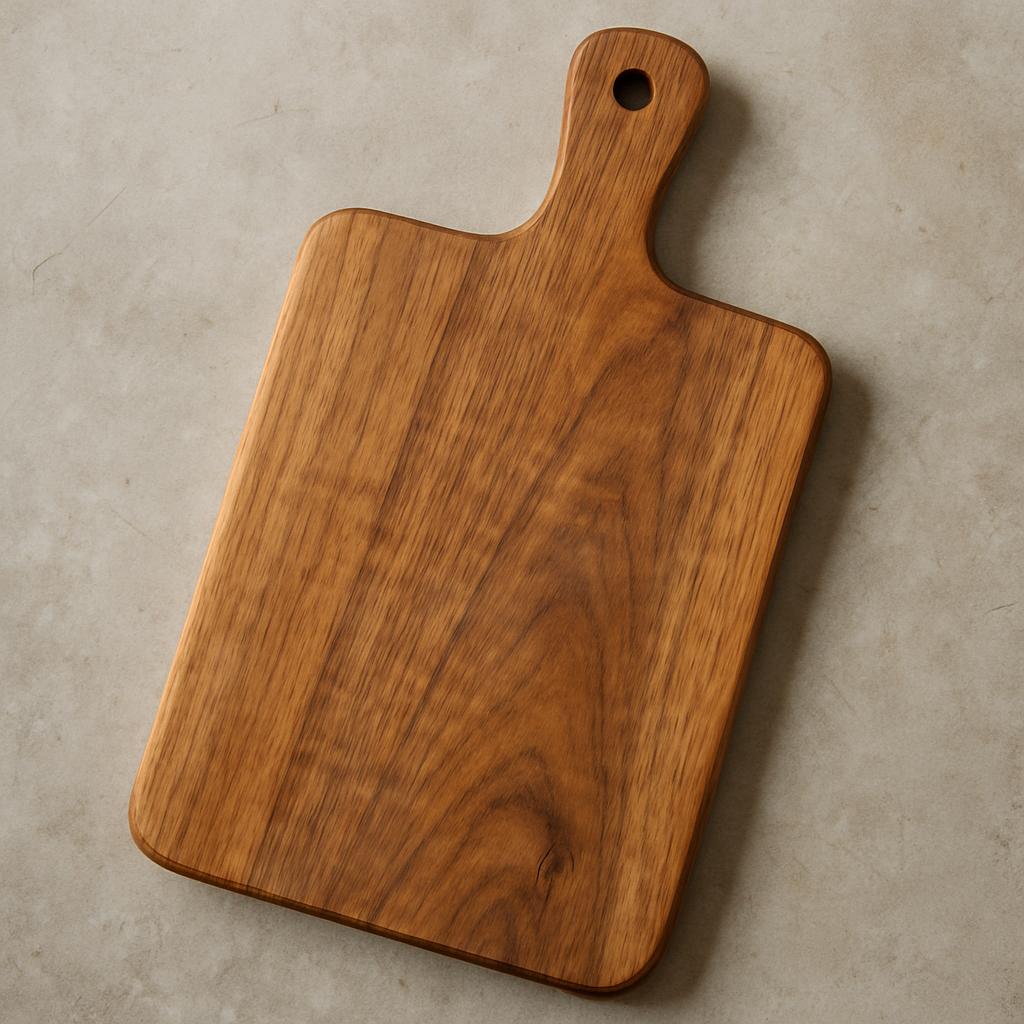
In getting my website online, I used AI to generate the structure. This post, Making a Cutting Board is just one of the posts that was generated automatically. In the past few years, I’ve made several cutting boards but it has been a while since I’ve crafted one.
I have never crafted the cutting board pictured. I want to share with you the cutting boards that I have made and the anatomy of cutting boards.

My first cutting board was made as a result of a class at Woodcraft of Knoxville. The class was titled “Woodworking 101: Straight, Flat And Square”. Notice that class had nothing to do with cutting boards. One of the results of that class was that I decided to make cutting boards for my children for Christmas. This had to be something special so I ordered three cutting board kits from Woodcraft Supply. Of course, it had to be the exotic kit.
While the kits were the same, I wanted the cutting boards to be different. I went to work arranging the wooden parts into different patterns. This was harder than I thought it would be. After a couple of hours, I had my three patterns; it was time for the glue up!
You have to look hard. You can see that, even though the boards contain the same pieces, they are arranged differently. So these two boards have a different look.
Each cutting board has 25 small parts. This makes the glue up challenging. To keep the pattern you have to pay close attention. The glue must be applied quickly. This ensures the project gets in the clamps before the glue starts to set.
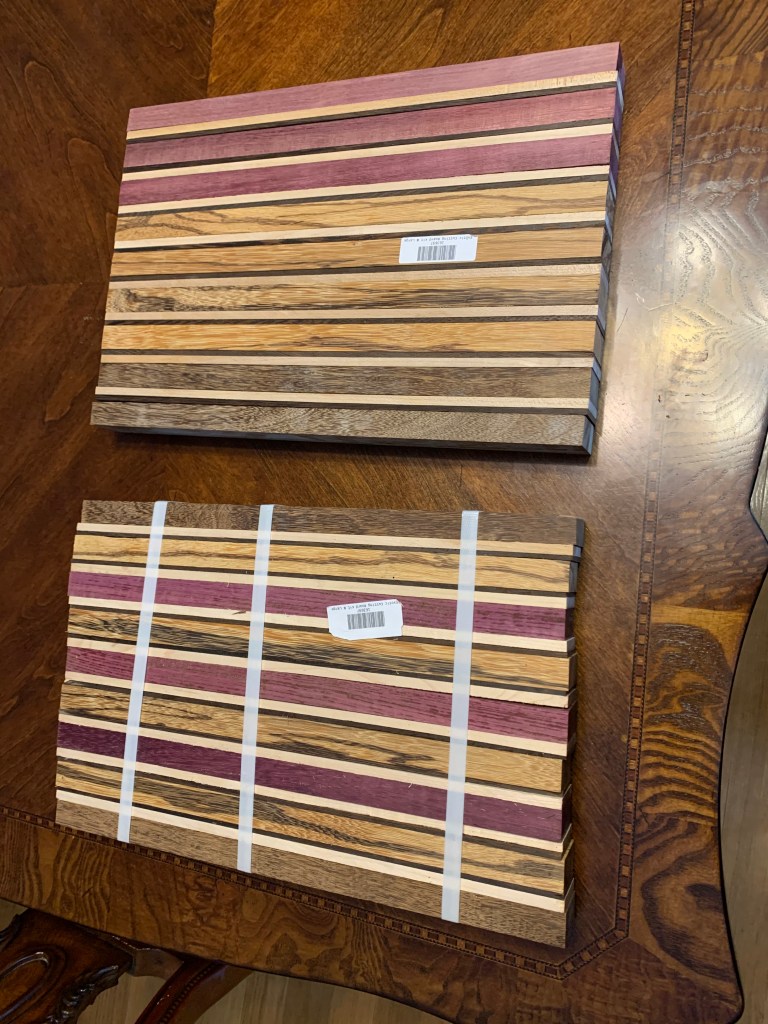
After sanding, the boards are finished in mineral oil and bee’s wax. The boards pictured above are made from exotic hardwoods. Let;s take a look at other types of boards.
TYPES of cutting boards
Cutting boards are made in the patterns listed below:
- Face grain
- Edge grain
- End grain
Face Grain
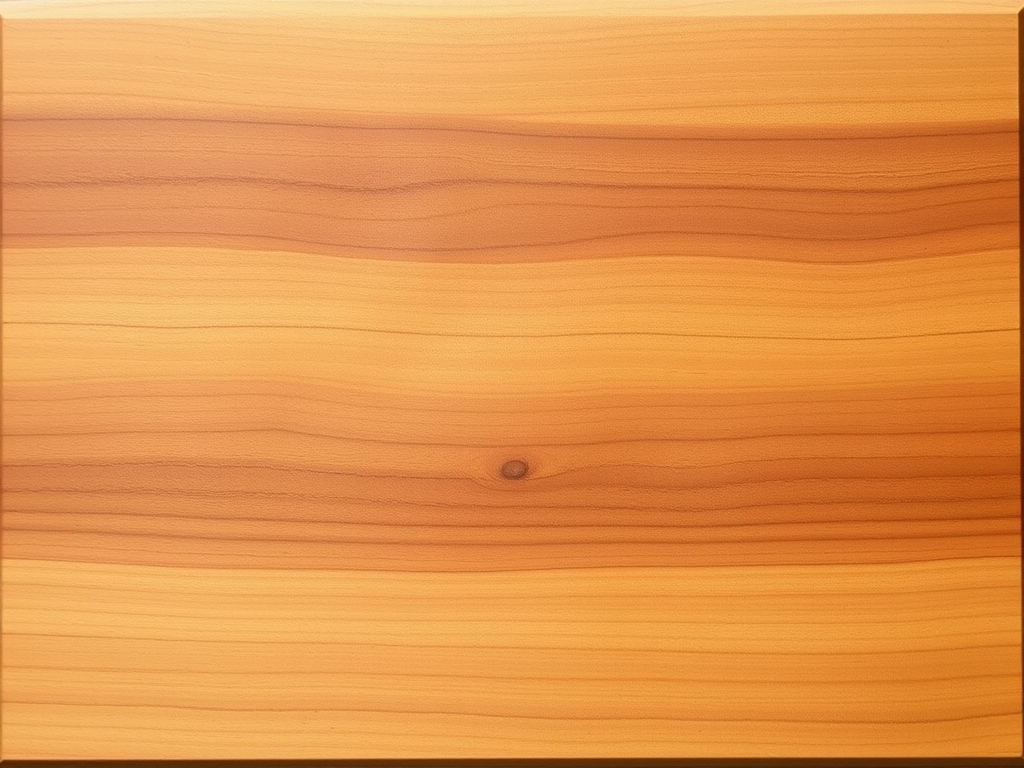
A face grain cutting board is the easiest to make. It consists of one or more wide boards sized to create a cutting surface. It can be embellished to include handles or a juice groove or both.
Edge Grain
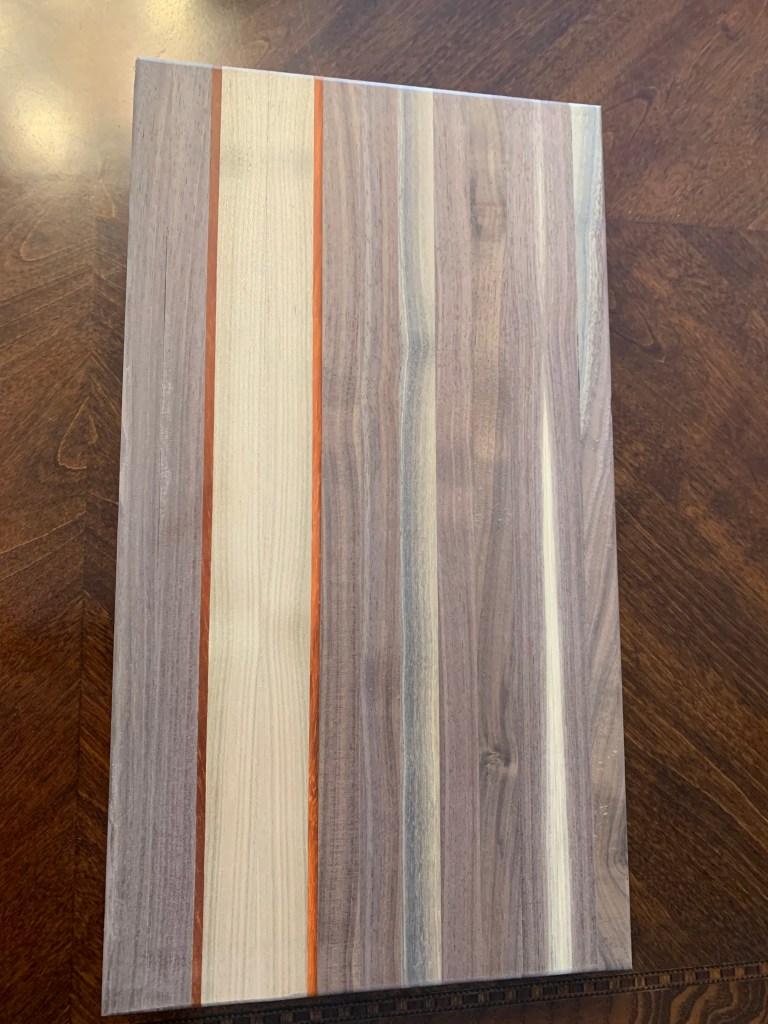
Fabricating an edge grain cutting board involves gluing the faces of boards together. This process exposes the edges of the boards. The boards made of exotic woods are examples of edge grain cutting boards.While the average face grain cutting board is about 3/4″ thick, an edge grain board is generally thicker. Also, more often than not, an edge grain board is made from multiple species of wood.When I make a cutting board I usually use three species of wood. The one pictured to the right is made from Walnut with a Maple stripe. The stripe is bordered with Padauk.
End Grain
The final type of cutting board we will discuss is the end grain cutting board. These are the most difficult to make. They usually include several species of wood arranged is a beautiful pattern. The board pictured below is a 3d Cutting board. I have not made one of these yet I got the picture from Etsy.

Conclusion
This post on cutting boards just covers the basics. There is much more we could discuss. Any one of these cutting boards is a wonderful gift. I personally have given them as Christmas gifts and wedding gifts. They also make great housewarming gifts and birthday gifts
I would be thrilled to make a board to your specifications. To find out more, use the contact form on this website and let me know what you need!
 LDC Woodcrafter
Leave a comment